The Slow Burn: How Dark Fantasy RPGs Turn You Into the Villain One 'Good Reason' at a Time

Here's a question worth sitting with for a minute: when was the last time a dark fantasy RPG made you do something genuinely awful, and you felt okay about it?
Not numb. Not button-mashing through a cutscene. Actually okay — maybe even convinced it was the right call. If you've logged serious hours in games like Baldur's Gate 3, Pathfinder: Wrath of the Righteous, or Dragon Age: Origins, you probably know exactly what that feels like. And if you've ever stopped mid-playthrough to wonder how you got to the point where you're sacrificing a village to power up a demon sword, well — welcome to the club. That moment of self-reflection is exactly what these games are designed to produce.
Dark fantasy RPGs don't just give you evil options. The good ones engineer a slow, almost imperceptible slide, stacking justifications on top of justifications until crossing a moral line feels less like a choice and more like the only logical conclusion.
The First Step Is Always Free
Game designers know something that casinos and cult recruiters also know: the first ask has to be easy. You're not going to open a game and immediately execute a prisoner. But you might rough up an informant who clearly knows something. You might steal medicine from a corrupt merchant to give to sick refugees. You might let a guilty man take the fall to protect someone you actually care about.
These early decisions aren't accidents. They're calibration tools. Games like Tyranny — Obsidian's criminally underplayed gem about serving an evil overlord — are almost surgical about this. From the opening moments, you're complicit in atrocity, but the framing is so matter-of-fact, so bureaucratic, that it barely registers. By the time the stakes escalate, your moral compass has already been quietly recalibrated.
Psychologists call this incrementalism — the process by which small, acceptable steps gradually normalize increasingly extreme behavior. Game designers probably just call it good level design, but the effect is identical.
"I Had No Choice" — The Lie We Tell Ourselves
One of the cleverest tricks in the dark fantasy playbook is manufacturing the illusion of inevitability. The game presents you with a choice, but the surrounding context — the lore, the stakes, the ticking clock — is carefully arranged so that the dark option feels like the only realistic one.
Think about the Urn of Sacred Ashes quest in Dragon Age: Origins. You can defile a holy relic to gain a massive combat advantage against an enemy that will almost certainly kill your party otherwise. The game doesn't force you. But it's made sure you know exactly how hard the upcoming fight is. It's made sure you're attached to your companions. It's made sure you understand what losing means for the world.
So you defile the urn. And then you tell yourself you had no choice.
This is the psychological sleight of hand at the heart of moral compromise in these games. The choice architecture isn't neutral — it's weighted, often heavily, toward the darker path. And when players feel like they were pushed rather than led, the guilt dissolves. You weren't weak. You were pragmatic. The game made you do it.
Except it didn't. That's the whole point.
Attachment Is the Real Mechanic
Raw power progression will get players to do a lot. But attachment? Attachment will get them to do anything.
Dark fantasy RPGs figured this out early. The reason Faustian bargains land so hard in games isn't the promise of power — it's the threat of loss. When a demon offers you a deal in Baldur's Gate 3 and the price is someone else's suffering, the calculus changes completely depending on who's in your party, who you've romanced, who you've been traveling with for 60 hours.
Game writers weaponize that bond deliberately. They introduce likable characters, give them backstories, let you share moments with them — and then put those characters in jeopardy at exactly the moment they need you to make a dark choice. It's not manipulation in a cynical sense. It's just very, very good storytelling that understands what players value.
The result is that players don't just rationalize dark decisions — they defend them, sometimes passionately. Go browse any RPG subreddit after a major release and you'll find lengthy threads where players argue, with genuine conviction, that sacrificing an NPC village was actually the morally correct decision given the circumstances. The game hasn't just made them do something dark. It's made them believe in it.
When Agency Becomes Complicity
There's a fascinating tension in how the best dark fantasy RPGs handle player agency. On one hand, they market themselves on freedom — you can be whoever you want, do whatever you choose. On the other, the most memorable moments in these games are specifically the ones where your choices feel least free.
Spec Ops: The Line — not a fantasy game, but a masterclass in this technique — famously forces a moment so disturbing that many players stopped playing. The game then spends its remaining runtime making you confront why you kept going. Dark fantasy RPGs rarely go that far, but the underlying question is the same: at what point does player agency shade into complicity?
When you're handed a choice between two bad options and you pick the one that benefits your character, are you making a game decision or a moral one? The genius of games like Planescape: Torment or Disco Elysium is that they refuse to let you cleanly separate those two things. Your character's sins become your sins, not because the game lectures you, but because it's made you care enough that the distinction stops mattering.
Why We Keep Going Back
So why do we love this? Why do millions of players actively seek out games that are specifically designed to make them feel bad about their decisions?
Part of it is safe exploration — the ability to inhabit moral complexity without real-world consequences. Part of it is narrative satisfaction, because stories about people who compromise their values are almost always more interesting than stories about people who don't. And part of it, honestly, is that these games reflect something true about how humans actually operate. We rationalize. We prioritize. We tell ourselves the ends justify the means and then live with the cognitive dissonance.
Dark fantasy RPGs don't create that tendency in us. They just hold up a mirror.
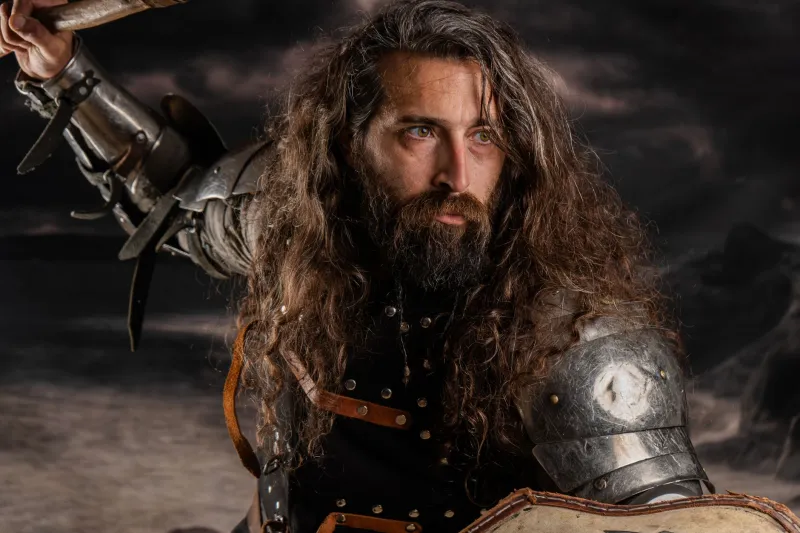
The fallen knight of legend isn't someone who chose evil from the start. They're someone who had very good reasons, every single time, right up until the moment they didn't recognize themselves anymore.
Sound familiar? It should. You've probably been there. The game made sure of it.