Broken Blades and Broken Men: The Irresistible Pull of RPG's Most Damned Protagonists
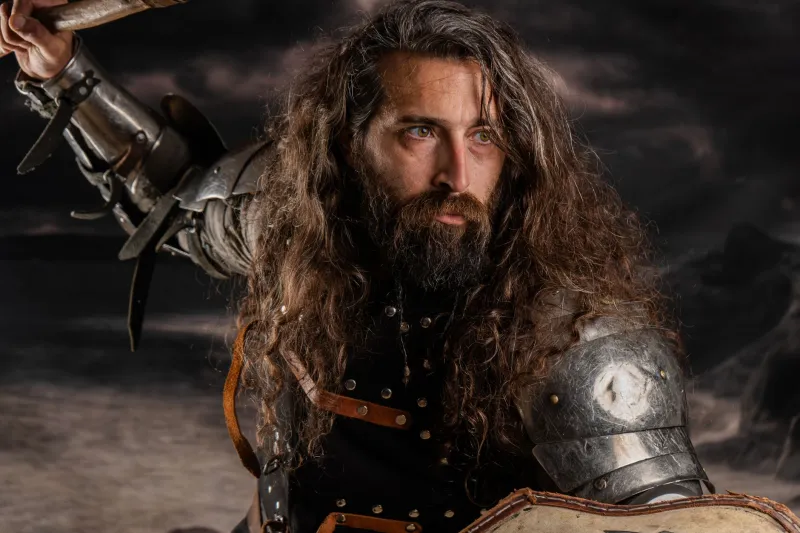
Here's a weird confession: the moment a game hands me a character with a squeaky-clean moral record and a destiny written in gold, I start tuning out. But the second someone drops a half-corrupted sorcerer, a disgraced knight drowning in guilt, or a mercenary who sold out their entire village for a handful of coin? Suddenly I'm six hours deep and it's 2 AM on a Tuesday.
There's a reason dark fantasy games keep returning to the fallen hero archetype — and it's not just edginess for edginess's sake. The psychology behind why we root for the damned is actually pretty fascinating, and developers like Larian Studios, FromSoftware, and Capcom have clearly figured out how to weaponize it.
The "Already Fallen" Character Skips the Boring Part
Traditional hero arcs follow a familiar rhythm. Farm boy discovers destiny. Farm boy struggles with responsibility. Farm boy saves the world. It's a formula that works, but it also asks you to sit through a lot of setup before anything morally interesting happens.
The fallen hero flips that structure entirely. When you load into Baldur's Gate 3 with a Mind Flayer parasite burrowing through your skull, the moral complexity isn't a destination — it's the starting point. You're already compromised. The question isn't will you make a dark choice; it's how dark are you willing to go?
That's a fundamentally different kind of tension. And honestly? It's more honest to how a lot of us experience real-life decision-making. We don't start from a place of perfect virtue. We're already carrying baggage. We're already a little bit broken. A character who reflects that feels way more relatable than some chosen farmhand with a glowing sword.
FromSoftware Knows You Want to Feel Like a Monster (A Little Bit)
Let's talk about Elden Ring for a second, because FromSoftware has built an entire design philosophy around making you feel like an outsider — someone the world has rejected and possibly should have kept rejected.
The Tarnished aren't heroes. They're rejects. Grace abandoned them once, and now it's calling them back for reasons that feel more like a cosmic experiment than a noble quest. Every NPC you meet either pities you, fears you, or tries to use you. The world isn't waiting to be saved by you — it's barely tolerating your presence.
And yet you press forward. Why? Because FromSoftware understands that the fallen character archetype taps into something primal: the desire to prove worth despite — or because of — a tainted history. There's no redemption arc handed to you on a platter. You claw it out of the dirt yourself, or you don't get one at all. That ambiguity is what makes it stick.
Dragon's Dogma 2 and the Weight of a Stolen Heart
Capcom's Dragon's Dogma 2 takes a slightly different angle on the fallen protagonist formula. Your Arisen isn't just morally compromised — they're literally incomplete. The Dragon has taken something fundamental from you, and the entire journey is colored by that absence.
What's clever about this setup is that it externalizes the "fallen" quality. You're not fallen because of choices you made. You're fallen because something was done to you. That shifts the player's emotional engagement in an interesting direction — it's less about guilt and more about identity. Who are you when the thing that defines you has been ripped away?
That question lands differently than your standard dark hero narrative, and it speaks to why the archetype is so versatile. "Fallen" doesn't have to mean morally corrupt. It can mean displaced, diminished, or fundamentally altered. The common thread is that these characters are operating at a deficit — and watching them navigate that deficit is compelling as hell.
The Redemption Arc Problem (And Why Some Games Get It Wrong)
Here's where things get a little thorny. A lot of games set up a fallen protagonist and then scramble to give them a clean redemption by the third act. It's understandable — writers want to leave players feeling good, publishers want a marketable ending — but it often undercuts everything that made the character interesting in the first place.
When a morally gray character gets scrubbed clean by a tearful sacrifice or a last-minute act of heroism, it can feel like the game is apologizing for itself. Like it got cold feet about committing to the darkness it spent 40 hours building.
The best dark fantasy games resist that impulse. Baldur's Gate 3 lets you play a genuinely irredeemable character if that's the path you choose — and it doesn't flinch from the consequences. Elden Ring offers multiple endings, some of which are flat-out catastrophic for the world, and treats them as equally valid. That respect for player agency, even when that agency leads somewhere grim, is what separates a truly compelling fallen hero narrative from one that's just wearing dark clothes.
Why We Actually Root for Them
So what's the psychological hook here? Why do we, as players, get so invested in characters who have done terrible things or had terrible things done to them?
Part of it is the projection factor. Video games are one of the few storytelling mediums where you're not just observing a character — you're inhabiting them. When a fallen hero makes a choice, you made that choice. The moral weight lands differently than it does in a novel or a film.
Part of it is also the stakes. A character who has already lost everything has nothing left to protect through conventional virtue. They can go places narratively that a traditional hero can't, and that unpredictability keeps you engaged in a way that a guaranteed good ending never could.
And honestly? Part of it is just that flawed characters are more interesting to spend time with. The best fallen heroes in gaming — your Durges, your Tarnished, your Arisen — have texture. They have history. They carry contradictions. They feel like people rather than archetypes, even when they're technically serving an archetypal function.
The Fallen Knight Stays Fallen (At Least for a While)
The name of this site isn't an accident. There's something about the image of a knight who has fallen — from grace, from purpose, from the ideals they once held — that captures something essential about what dark fantasy does best.
These games aren't just selling you power fantasies. They're selling you complicated power fantasies, ones where the power comes with a price and the fantasy includes the possibility of failure, corruption, and genuine moral cost. That's a harder sell than saving the world with a smile, but it's also a more honest one.
The fallen hero endures because they reflect a truth most of us already know: the most interesting stories aren't about people who never stumble. They're about what happens after the stumble — and whether getting back up makes things better, or just differently broken.
Now if you'll excuse me, I have a Dark Urge playthrough to get back to. Some choices don't make themselves.