One Small Step Into Darkness: How the Best Dark Fantasy RPGs Make You the Architect of Your Own Fall

There's a moment in almost every great dark fantasy RPG — a quiet, almost forgettable moment — where you make a choice that feels totally justified. Maybe you rough up a merchant who had information you needed. Maybe you let someone die because saving them would have cost you resources you couldn't spare. It's fine, you tell yourself. It made sense given the circumstances.
Fast forward twenty hours, and you're sacrificing innocents for a power boost, and it barely registers as a moral event at all.
That's the corruption curve. And the best games in the genre have turned it into a masterclass in psychological design.
The Slow Boil Nobody Talks About Enough
Sudden heel turns in fiction are satisfying in their own way — there's drama in the snap, the moment a character crosses a line in one decisive stride. But dark fantasy RPGs are increasingly interested in something far more unsettling: the gradual erosion of a player's moral compass through accumulated small decisions.
Baldur's Gate 3 is maybe the best modern example of this working at full tilt. The game never forces you to become a monster. Instead, it dangles the Illithid parasite progression in front of you like a piece of candy. Each tadpole power you unlock is just a little shortcut, a slightly unfair advantage against a genuinely brutal encounter. The game even frames some of these abilities as heroic in the short term — saving a companion, surviving an ambush. By the time you're deep into the skill tree, you've rewritten your character's identity without ever feeling like you made a dramatic, villain-coded choice.
That's intentional. That's the design.
Reputation Systems as Moral Mirrors
Mechanically, the corruption curve lives and dies in reputation and alignment systems. Done poorly, these are just approval meters — NPCs like you more or less depending on whether you were nice or mean. Done well, they function as mirrors, reflecting back a version of your character that you might not fully recognize anymore.
Divinity: Original Sin 2 leans hard into this through its Source mechanic. Source power — the lifeblood of the game's magic system — is essentially harvested from living beings. Early on, the game makes this feel like a necessary evil in a world already drowning in necessary evils. But as the campaign deepens, the cost of that power becomes harder and harder to rationalize. The game doesn't lecture you. It just keeps handing you the bill.
What makes systems like these so effective is that they externalize internal moral drift. You're not just reading about your character becoming darker — you're watching NPCs react to it, watching dialogue options shift, watching doors close as other, grimmer ones open. The world reconfigures itself around the person you've been quietly becoming.
The Complicity Trap
Here's the thing game designers know that casual players often don't consciously register: the corruption curve works because it exploits the sunk cost fallacy in real time.
You've already done so much to get here. You've already made those earlier choices. Walking back now would mean confronting what those choices meant — and the game has been carefully designed to keep that confrontation just out of arm's reach. So you keep going. You tell yourself the endgame justifies the means. You tell yourself the world was already broken before you got there.
Narrative checkpoints — those big, story-defining moments where games force you to make an explicit choice — are often less morally significant than the dozens of mechanical micro-decisions that preceded them. By the time you reach the dramatic fork in the road, your character's identity has already been quietly reshaped by skill unlocks, reputation shifts, and resource decisions that never felt like moral choices at all. The big dramatic moment is almost just a formality.
Games like Tyranny, Obsidian's criminally underappreciated dark fantasy RPG, build their entire premise around this idea. You start the game as an enforcer for an evil empire — the moral compromise isn't a destination, it's the starting condition. The genius of Tyranny is that it then asks you to navigate degrees of complicity, forcing you to reckon with the fact that even within an evil system, your specific choices have shaped specific outcomes. There's no clean hands ending. There's just the particular shape of the darkness you chose.
Why Slow Corruption Hits Harder Than a Sudden Fall
A character who turns evil in a cutscene is someone else's story. A character who turns evil because of four hundred small decisions you personally made over thirty hours of gameplay? That's your story. That's your fall.
The slow-burn corruption model creates ownership in a way that scripted villain arcs simply can't. When the game finally holds up the mirror and shows you what you've become, the horror isn't abstract. It's personal. You remember the choices. You remember the justifications. You remember the exact moment you stopped flinching.
This is what separates dark fantasy RPGs from dark fantasy novels or films. The medium is participatory. The genre uses that participation as a weapon.
There's also something deeply true about it — maybe uncomfortably true. Real moral drift in real human beings doesn't usually happen in dramatic moments of conscious choice. It happens incrementally, through rationalization, through normalization, through the slow recalibration of what feels acceptable. The best dark fantasy RPGs are, in a weird way, one of the more honest depictions of how people actually lose their way.
The Knight That Falls Slowly
If you've ever reached the end of a dark fantasy campaign and felt a strange, hollow unease — not just at what your character did, but at how little it bothered you by the time they did it — then you've experienced the corruption curve working exactly as intended.
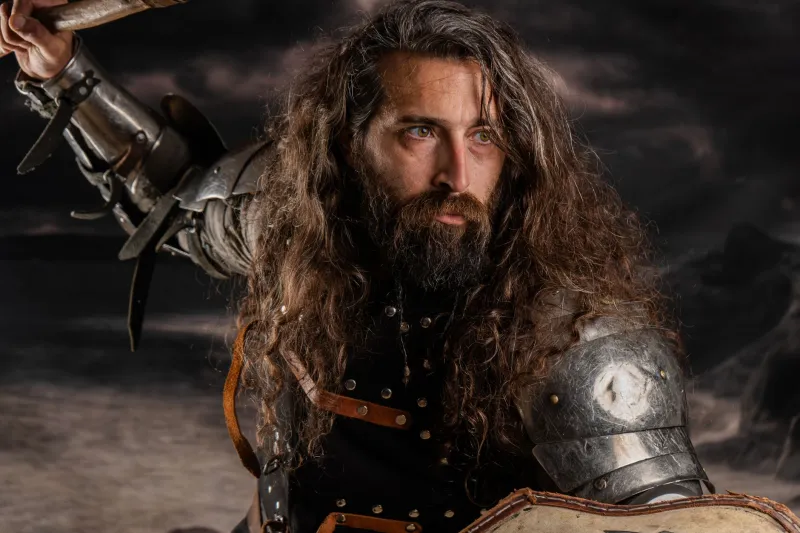
The fallen knight is a staple of the genre for a reason. Not because the fall is dramatic. Because the fall is so, so gradual. Because there's never one moment you can point to and say, that's where it went wrong. Because every step felt, in context, like the only reasonable thing to do.
That's the dark genius of the best RPGs in this space. They don't make you a villain. They just make it really, really easy to become one — and then they hand you a mirror at the end and let you sit with what you're looking at.
Some players reload an old save. Most just keep walking.