The Oathbreaker Audit: Six Dark Fantasy RPGs Put to the Disgraced-Paladin Test
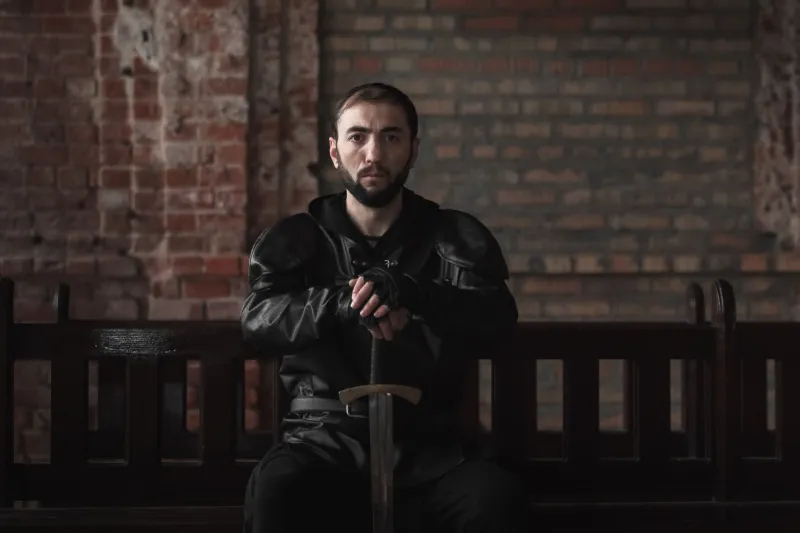
There is a very specific itch in dark fantasy RPGs. It is not the itch to swing a greatsword at a dragon. It is the itch to walk into a chapel with a broken oath hanging around your neck and see whether the world notices. You want to be a paladin who failed. A knight whose order burned the writ with your name on it. A holy warrior who kept the armor and lost the cause. In 2026, plenty of games let you wear the armor. Far fewer let you feel the stain.
So we built the disgraced paladin test. We looked at six dark fantasy RPGs and judged them on four things: oath mechanics that create real friction, roleplay freedom to define what your fall meant, redemption arcs that are not just a quest marker, and world reactivity. Does anyone spit when you walk by? Does a priest remember your name? Does the game treat your broken vow as flavor text or as a wound? This is not about combat stats. A paladin can hit hard in almost anything. The question is whether the game lets you play the fall.
6. Elden Ring
Elden Ring is a masterpiece of atmosphere, and it is weirdly great at making you feel like a knight who has outlived his purpose. The armor is gorgeous. The ruins are full of dead orders. The vibe is pure disgraced crusader. But the game does not really know you broke an oath. There is no paladin class, no oath to violate, no faction that brands you heretic. The world reacts to your runes and your violence, not your shame. You can roleplay the fall in your head, and that counts for something. It just does not count for much on this specific test.
5. Lords of the Fallen
The reboot has the look. Dark crusaders, heavy armor, churches full of bad news, and a world that feels like it was built on a buried crime. You absolutely look like a knight who got kicked out of heaven and kept the uniform. The problem is that the story is doing most of the heavy lifting. Your fall is not a system you can push against. It is a mood. That is fine for an action RPG, but for the disgraced paladin fantasy, mood is only half the job. We want the world to argue with us. Here, it mostly wants us to dodge.
4. Dark Souls III
Dark Souls III understands decay better than almost any game. The knights of Lothric are loyal to a kingdom that is already gone. The Ashes of Ariandel story is soaked in oath and failure. If you want to play a knight who is tired, hollow, and still swinging, this is your game. But the series has never been big on explicit oath mechanics. You can betray NPCs. You can walk away from questlines. The world rarely gives you a formal verdict. Dark Souls III is a great place to feel disgraced. It is a less great place to be told you are disgraced. There is a difference, and the difference matters.
3. Dragon Age: Inquisition
Dragon Age: Inquisition is not a paladin game in the strict sense. You are not a holy knight with a code, and the Inquisitor is more politician than zealot. But the game is excellent at letting you play a faithful person in a faithless world. You can lean into Andraste, reject her, or use her name like a weapon. Templars, Seekers, and Cassandra all give the story a spine of oath and duty. The world reacts to your religious identity, which is rare. The downside is that your fall is more political than personal. You can be a heretic, but you are a heretic with a war table. That is fun. It is just not the same as being a paladin who broke a vow and has to live in the wreckage.
2. Pillars of Eternity II: Deadfire
This is where the list gets serious. Pillars of Eternity II has paladin orders with actual dispositions. If you act against your order's values, the game notices. Your choices shape your reputation with gods, factions, and companions. You can be a principled knight, a hypocrite, or a zealot who has convinced themselves that the ends justify the means. Deadfire is also brilliant at making redemption feel ambiguous. You are not collecting good points. You are managing a reputation in a world that has already made up its mind about you. It loses the top spot because the presentation is less cinematic and the oath mechanics are not as in your face as they could be. But for pure roleplay, it is a monster.
1. Baldur's Gate 3
Baldur's Gate 3 wins because it actually lets you break the oath. The Oathbreaker paladin is not a cosmetic choice. It is a mechanical fall with narrative weight. You can start as a devoted paladin, violate your tenets, and wake up with a different subclass and a different set of expectations. NPCs react. The world has opinions. You can try to restore your oath or lean into the fall. The game gives you room to define what kind of disgraced knight you are: a remorseful penitent, a self-righteous butcher, or a pragmatist who decided the vow was the problem. That is the fantasy. Not just the armor. The argument.
Honorable Mention: Pathfinder: Wrath of the Righteous
Wrath of the Righteous deserves a shout for its mythic paths and its willingness to let you play a holy warrior who becomes something much worse. It is dense, crunchy, and sometimes overwhelming. But if you want a game that treats faith and fall as a philosophical problem, it belongs in the conversation.
The best dark fantasy RPGs do not just let you look fallen. They let you feel the weight of a promise that no longer fits. In 2026, that is still rarer than it should be. We have no shortage of knights. We need more games that remember the oath.